Timeline To Become A Journeyman Electrician From Apprentice
The Real Timeline: From Sparky Apprentice to Journeyman Electrician
So, you’re thinking about becoming an electrician, huh? Maybe you’re tired of the same old grind, or perhaps you just love the idea of bringing power to life. Whatever the reason, you’re probably wondering: just how long does this whole thing take? It’s not a simple flip of a switch, that’s for sure. It’s a journey, a structured climb, and it demands dedication. Let’s break down the actual path, the one they don’t always shout about, from being a green apprentice to earning that coveted journeyman status.
Forget those glossy brochures for a second. The road to becoming a journeyman electrician is paved with hard work, sweat, and a whole lot of learning. It’s about hours clocked, skills honed, and a deep understanding of how to safely and effectively wire up the world around us. It’s a career that offers stability, good pay, and the satisfaction of building tangible things. But what’s the actual, honest-to-goodness timeline? Let’s dive in, no fluff.
The Absolute Basics: Getting Your Foot in the Door
Source : trade-schools.net
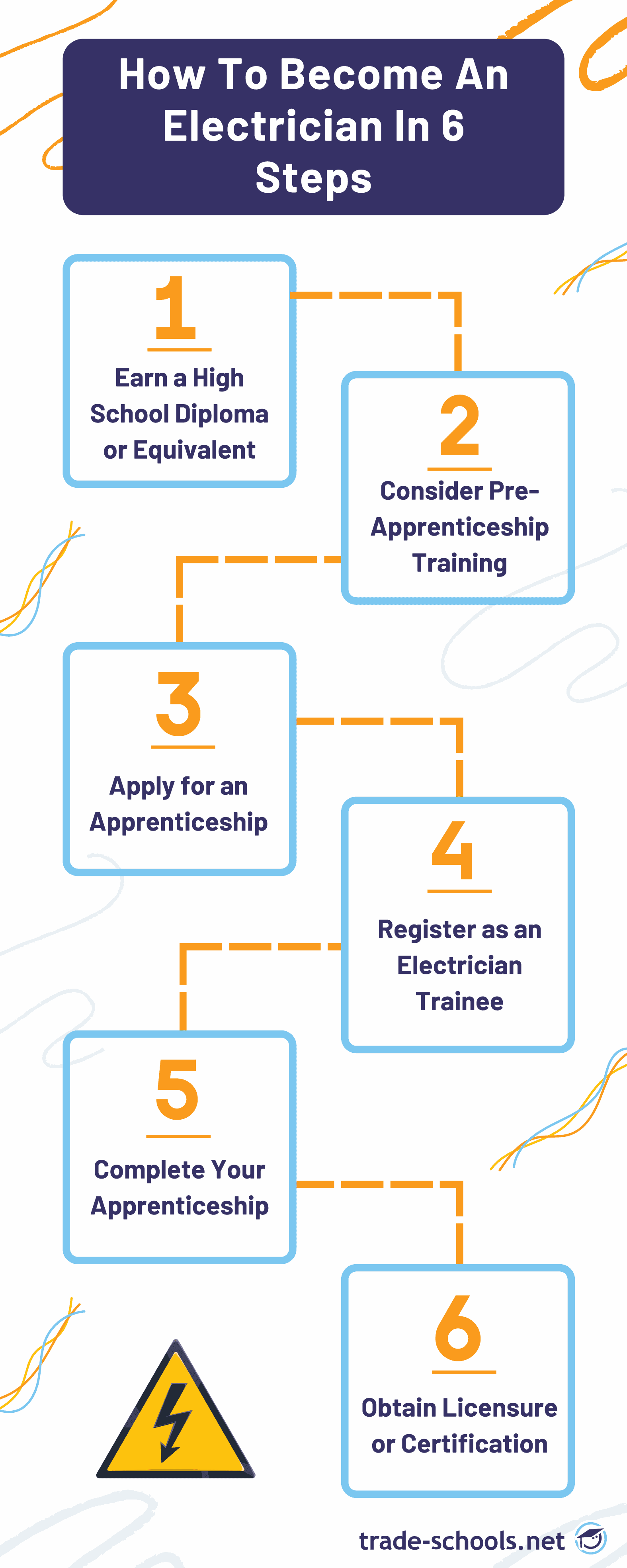
Before you can even dream of pulling wire like a pro, you’ve got to meet some fundamental requirements. It’s like needing the right ingredients before you can even start baking. This isn’t rocket science, but it’s the necessary groundwork.
Minimum Age and Education Hurdles
Most places won’t let you start this gig until you’re at least 18. Makes sense, right? You’re dealing with electricity, after all. Beyond that, you’ll generally need a high school diploma or a GED. Some programs might even ask for a certain GPA or specific coursework, like math and shop classes. It shows you’ve got the basic smarts to handle the technical stuff later on. Don’t overlook this; it’s the first gate you need to pass.
Physical and Mental Aptitude Checks
This job isn’t for the faint of heart, or those who shy away from a bit of grunt work. You’ll likely need to pass a physical exam to prove you’re up to the task. Think good vision, decent hearing, and the ability to handle physical labor. No serious medical conditions that could be aggravated by the work. Mentally? You need to be sharp, able to follow instructions precisely, and have a knack for problem-solving. One wrong move can be dangerous, so a calm head is Needed.
Drug Testing: A Non-Negotiable Step
Safety is Top in this trade. Many employers and apprenticeship programs require pre-employment drug screening, and random testing throughout your tenure. It’s a standard part of the industry to Make sure everyone on the job site is alert and capable. If you plan on being an electrician, you need to be prepared for this. It’s just part of the professional commitment required.
Apprenticeship: The Core of Your Training
Source : asktheelectricalguy.com
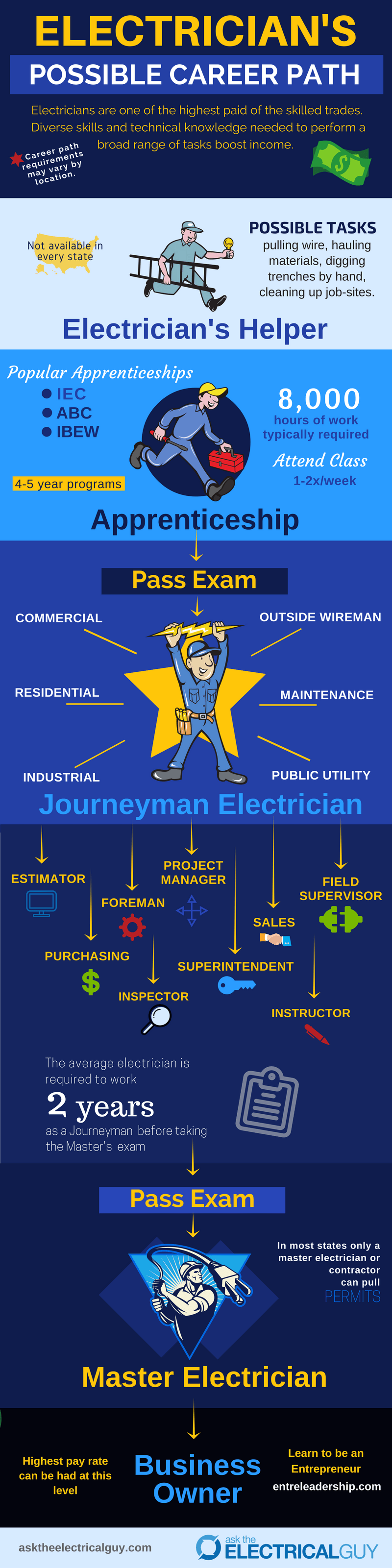
This is where the real magic happens. The apprenticeship is your on-the-job training ground. It’s where theory meets practice, and where you transform from a novice into a competent tradesperson. Think of it as earning while you learn, but it’s demanding.
Finding and Entering an Apprenticeship Program
Getting into a good apprenticeship program is the next big step. You’ve got two main routes: joining a union apprenticeship or going through a non-union program, often sponsored by electrical contractors or trade associations. Union programs are typically highly structured and competitive, often with their own training centers. Non-union programs can vary more widely but offer direct entry with an employer. Research is key here; find a program that fits your goals and location. The electrician career path USA often starts with securing a spot in a reputable program. It’s about finding the right fit.
The Typical Apprenticeship Duration: Hours and Years
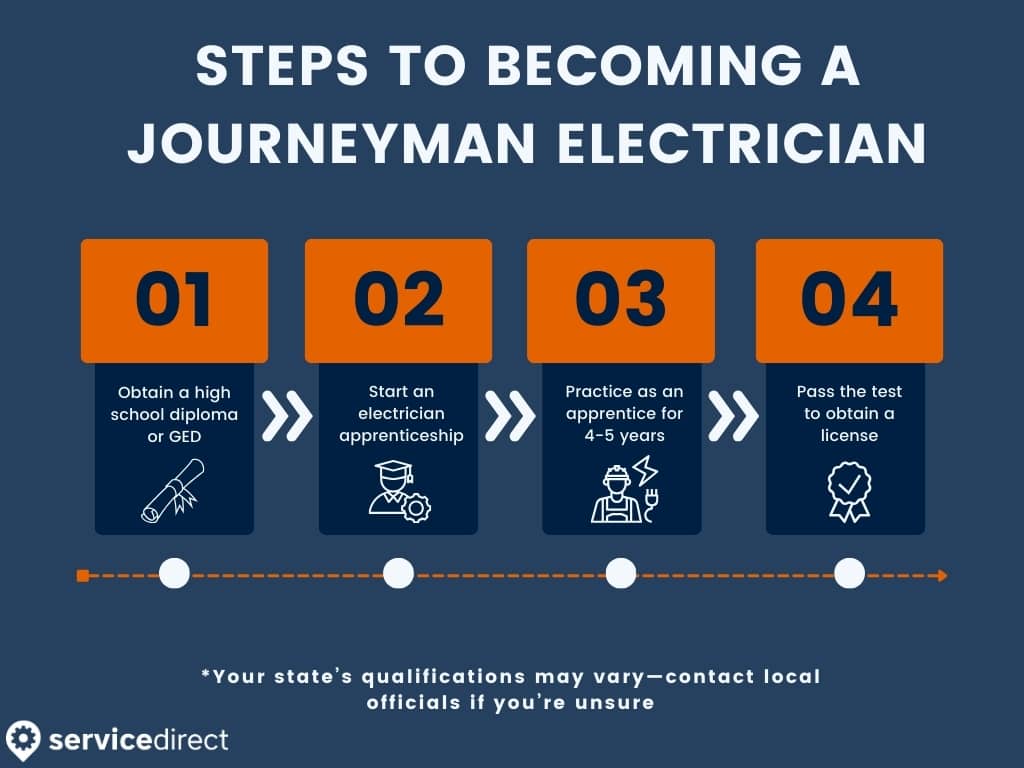
Here’s the meat of it. Most apprenticeship programs last between four to five years. This isn’t just busywork, though. You’ll be accumulating a set number of on-the-job training hours, usually around 8,000 hours. On top of that, you’ll be required to complete a minimum of 500-1000 hours of classroom instruction. These are not just suggestions; they are mandatory requirements to qualify for the journeyman exam. It’s a significant chunk of your life, but Needed for building true expertise.
Classroom Learning vs. On-the-Job Experience
Your apprenticeship isn’t just about swinging a hammer or pulling wire. You’ll spend significant time in classrooms, learning the National Electrical Code (NEC), circuit theory, blueprint reading, safety procedures, and advanced troubleshooting. This theoretical knowledge is then immediately applied in the field under the supervision of experienced electricians. It’s this blend that makes apprenticeships so effective. You learn the ‘why’ in class and the ‘how’ on the job. This dual approach ensures you’re not just a pair of hands, but a thinking professional.
Apprentice Pay: What to Expect
Let’s be real, apprenticeships aren’t always glamorous in terms of pay, especially at the start. You’ll earn less than a journeyman, typically a percentage of the journeyman wage, which increases incrementally as you progress through the program. Union apprentices often have set wage scales, while non-union wages can be more variable. It’s a trade-off: you’re investing in your future earning potential. Expect to start at maybe 50-60% of a journeyman’s rate and climb from there. This earning progression reflects your growing skills.
The Role of Trade School and Electrical Courses
While an apprenticeship is the primary route, sometimes formal schooling plays a part, either as a precursor or a supplement. These programs can give you a head start or a different flavor of education.
Pre-Apprenticeship Programs
Some individuals opt for pre-apprenticeship programs before diving into a full-blown apprenticeship. These courses, often shorter in duration (a few months to a year), focus on basic electrical principles, safety, tool usage, and an introduction to the trade. They can be a great way to test the waters, build foundational skills, and make yourself a more attractive candidate for competitive apprenticeship programs. Think of it as a training camp before the main season.
Vocational School vs. Community College Programs
Vocational schools and community colleges offer dedicated electrical technology programs. These can range from certificate programs (shorter, focused) to associate’s degrees (more Full, longer). While these programs provide excellent theoretical knowledge and hands-on training, they often don’t replace the required on-the-job hours for journeyman licensing. Some states might allow a portion of these educational hours to count towards apprenticeship requirements, but you need to check local regulations carefully. It’s a way to get a solid education, but verify its credit toward your ultimate goal.
Accelerated Training Options
Are there ways to speed things up? Sometimes. Certain intensive, full-time electrical training programs aim to condense the learning process. These can be costly and might still require you to secure a separate apprenticeship to meet licensing hour requirements. They are designed for individuals who want to immerse themselves fully and potentially gain a competitive edge. However, the timeline to become an electrician is generally dictated by regulatory bodies and the need for practical experience, which can’t always be rushed. Speed isn’t always the best metric.
State-Specific Licensing and Requirements
This is a big one. Becoming a licensed journeyman electrician isn’t a one-size-fits-all deal. Each state, and sometimes even local municipalities, has its own set of rules. Ignoring these is a recipe for disaster.
Understanding Your State’s Licensing Board
The first thing you absolutely must do is identify the licensing authority in the state where you intend to work. This is usually a state’s Department of Labor, Department of Professional Regulation, or a specific electrical board. Their website will be your bible for understanding the exact requirements. They dictate everything from the number of training hours needed to the types of exams you’ll face. Get familiar with your local governing body.

Source : esfi.org
Hour Requirements and Experience Verification
States mandate a specific number of on-the-job training hours. This can range from around 4,000 hours in some states to 8,000 hours or more in others. They’ll want proof! This usually involves logging your hours with your employer and having them verified. Some states also specify how many of those hours must be in specific areas, like residential, commercial, or industrial electrical work. Accurate record-keeping is Key here.
The Journeyman Electrical Exam: What to Expect
Once you’ve completed your required hours and classroom time, you’ll be eligible to take the journeyman licensing exam. This is typically a Full test covering the National Electrical Code (NEC), electrical theory, safety practices, and practical application. Exams can be challenging and require serious preparation. Many candidates use study guides, practice tests, or even take prep courses to Make sure they pass on the first try. Failing this exam means more waiting and potentially more study. It’s the final hurdle before you’re officially recognized.
Reciprocity and Working in Other States
What if you get licensed in one state and want to move? Some states have reciprocity agreements, meaning your license might be honored or easily transferable. Others require you to re-take their specific exam or meet their unique requirements. It’s a patchwork system. Always check the reciprocity rules between states if you anticipate moving. This can significantly affect your ability to practice your trade freely. Don’t assume your license is universally valid.
The Journeyman Milestone: What It Means
Achieving journeyman status is a significant career achievement. It’s the point where you’re recognized as a fully qualified, independent electrician.
Defining Journeyman Status and Responsibilities
A journeyman electrician is a licensed professional who has completed an approved apprenticeship program and passed the state licensing exam. They are qualified to perform electrical work independently, supervise apprentices, and Make sure work complies with codes and safety standards. They understand complex electrical systems and can troubleshoot effectively. This is the standard-bearer role in the electrical trade, signifying competence and trust.
Increased Earning Potential
The pay bump you get when you become a journeyman is Large. You’re no longer just learning; you’re a productive, skilled member of the workforce. Your hourly wage will increase significantly, and you’ll often be eligible for benefits packages if you’re in a union or a larger company. This is the point where your investment starts paying off handsomely.
Supervisory Opportunities
As a journeyman, you’ll likely start taking on more responsibility. This often includes overseeing apprentices, guiding their training, and ensuring the quality of their work. You might also be tasked with leading smaller projects or specific phases of larger installations. It’s the first step towards potential leadership roles within a company or union. You become a mentor, a Key part of the next generation’s training.
Beyond Journeyman: The Path to Master Electrician
The journey doesn’t necessarily end at journeyman. For many, it’s a stepping stone to even greater expertise and career advancement.
Requirements for Master Electrician Licensing
Becoming a master electrician typically requires several more years of experience as a licensed journeyman (often 2-4 years, but varies by state). You’ll need to demonstrate a higher level of knowledge and experience, often passing an even more rigorous exam. Master electricians are generally qualified to design electrical systems, pull permits, and run their own contracting businesses. It’s a mark of advanced skill and responsibility.
Starting Your Own Electrical Business
The master electrician license is often the key qualification needed to start and operate your own electrical contracting business. This allows you to bid on jobs, hire other electricians (including apprentices), and manage projects from start to finish. It requires not only technical skill but also business acumen, management capabilities, and a thorough understanding of local business regulations and permitting processes. This is the pinnacle for many, the dream of entrepreneurship realized.
Specialization and Advanced Certifications
Many journeyman electricians choose to specialize in a particular area, such as industrial controls, solar installations, low-voltage systems, or medical facility wiring. Pursuing advanced certifications in these niches can significantly increase your expertise, marketability, and earning potential. These aren’t always required for licensing but are Crucial for career growth and staying competitive in a constantly evolving field. Specializing can open up highly lucrative opportunities.

Source : careersidekick.com
Factors That Can Affect Your Timeline
So, we’ve talked about the standard path. But life happens, and careers aren’t always linear. Several factors can either speed up or slow down your journey.
Program Availability and Competition
The availability of apprenticeship programs in your area and the level of competition for spots can significantly impact how quickly you can start. Some regions have more programs and fewer applicants, making entry easier. Others have high demand, leading to waiting lists and more rigorous selection processes. Geographic location plays a huge role in the initial entry point.
Your Own Pace of Learning and Performance
Some apprentices pick up concepts faster than others. Your ability to absorb information, demonstrate proficiency, and maintain a good safety record can influence how quickly you progress within your apprenticeship. Some programs have built-in milestones, and exceeding expectations can sometimes lead to earlier advancement or recommendations. Ultimately, your personal drive matters.
Economic Conditions and Job Market Demand
The demand for electricians fluctuates with the economy. During economic downturns, hiring might slow, and apprenticeship opportunities could become scarcer. Conversely, during boom times, there’s often a surge in demand, leading to more openings and potentially faster hiring. Staying informed about the construction and energy sectors is wise. A Strong job market can accelerate your career trajectory.
Taking Breaks or Changing Paths
Life throws curveballs. Taking time off for personal reasons, switching to a different trade, or needing to re-start apprenticeship hours after a break can all add time to your overall journey. It’s not uncommon for career paths to have detours. The key is to get back on track and keep moving towards your goal. Don’t let a temporary setback derail your long-term ambition.
The Financials: Costs and Earnings Along the Way
Let’s talk money. It’s not just about the time invested; it’s about the financial commitment and the return on that investment.
Costs Associated with Training and Licensing
While apprenticeships are often “earn while you learn,” there can still be costs. This might include tools you need to purchase (often a significant upfront expense), work boots, safety gear, tuition for related classroom instruction (if not fully covered by the program), exam fees, and licensing fees. Some pre-apprenticeship or trade school programs also have tuition costs. Budgeting for these expenses is important. Consider it an investment in your toolkit.
Earning Potential During Apprenticeship
As touched upon, your pay as an apprentice starts lower but increases steadily. For example, a union apprentice might start at around $15-$20 per hour (this varies wildly by location and union) and reach $30-$40+ per hour by their final year, plus benefits. Non-union wages can be more variable. The key is that you are earning a livable wage while gaining Crucial experience, which isn’t the case for many traditional degree programs.
Journeyman Salary Expectations
Once you’re a licensed journeyman, your earning potential jumps significantly. Depending on your location, whether you’re union or non-union, and the specific sector (residential, commercial, industrial), journeymen salaries can range widely. In many areas, it’s common to see rates from $50,000 to $80,000 annually, and in high-cost-of-living areas or specialized fields, it can be even higher. This is where the real financial rewards begin to materialize.
Long-Term Earnings as a Master or Business Owner
The sky’s the limit, relatively speaking, once you move beyond journeyman. Master electricians who run their own successful businesses can earn significantly more, potentially six figures annually, depending on the scale and profitability of their operations. Specialization also pays. Highly skilled technicians in niche fields often command premium rates. Your career earnings trajectory as an electrician is often very strong compared to many other trades or even some college-educated professions, making it a financially sound choice.
A Comparative Look: Timelines in the Trades
How does the electrician’s journey stack up against other skilled trades? It’s useful to see where it fits in the broader picture.
Source : blog.servicedirect.com
Electrician vs. Plumber vs. HVAC Technician Timelines
Generally, the timelines are quite similar across these core building trades. Most require 4-5 year apprenticeships, accumulation of thousands of on-the-job hours, and classroom components. Plumbers and HVAC technicians also face stringent licensing requirements and a path that leads from apprentice to journeyman to master or contractor. The fundamental structure of training and licensing is surprisingly consistent across these Needed skilled professions.
Apprenticeship Lengths in Other Industries
Comparing to other fields, a 4-5 year apprenticeship is Large. It’s longer than many short-term vocational certificates but often significantly shorter than a bachelor’s or master’s degree, with the key difference being the immediate earning potential during training. Some highly specialized trades might have longer apprenticeships, but the electrician path is fairly standard for a well-respected skilled trade.
The Value Proposition: Time vs. Earning Potential
When you weigh the 4-5 years of training against the strong starting salary as a journeyman and the high long-term earning potential, the value proposition is compelling. You’re debt-free (or significantly less indebted) compared to many university graduates, and you’re earning from day one. The path to becoming a journeyman electrician offers a Strong return on the time and effort invested, providing both financial security and career satisfaction.
Conclusion: Your Electrifying Future Awaits
So, there you have it. The path from a wide-eyed apprentice to a skilled journeyman electrician is a marathon, not a sprint. It typically spans four to five years, demanding a significant commitment to both hands-on learning and theoretical study. Add in the prerequisites and the potential for further advancement to master status, and you’re looking at a solid career foundation built over time.
Don’t get discouraged by the duration. Every hour spent learning, every wire pulled safely, every code book consulted, builds towards a future with good pay, job security, and the immense satisfaction of working in a trade that literally powers our world. It’s a challenging but incredibly rewarding career. If you’ve got the drive, the patience, and the willingness to learn, your electrifying career is well within reach. Start researching programs in your area today!
Frequently Asked Questions
How long from apprentice to journeyman electrician?
Generally, it takes about 4 to 5 years to go from an apprentice electrician to a full-fledged journeyman electrician. This timeframe includes your on-the-job training and classroom instruction, which are both super important.
How many hours does an apprentice need to become a journeyman?
Most states require around 8,000 hours of on-the-job training for an apprentice to qualify for the journeyman exam. Plus, you’ll typically need about 500-1000 hours of related classroom or technical instruction. So yeah, a lot of apprentice hours!
What are the 4 types of electricians?
You’ve got your residential electricians who handle homes, commercial electricians for businesses, industrial electricians for factories and plants, and then maintenance electricians who keep everything ruing smoothly. Each has its own specialty, like different flavors of electrical work.
What’s the difference between an apprentice and a journeyman electrician?
Think of an apprentice as a trainee, still learning the ropes under supervision. A journeyman has completed their apprenticeship, passed their licensing exam, and can work independently on electrical projects. They’ve got the skills and the license!
Can I become a journeyman faster through an apprenticeship program?
Some union-sponsored or specialized apprenticeship programs might have slightly accelerated timelines if you’re really on the ball and meet all requirements efficiently. But for most, the standard 4-5 year timeline is pretty solid. Gotta put in the work!
0 Response to "Timeline To Become A Journeyman Electrician From Apprentice"
Post a Comment