Fastest Way To Become A Certified Electrician In Texas
The Real Deal: How to Actually Become a Certified Electrician in Texas, FAST
Alright, let’s cut through the jargon. You want to become a certified electrician in Texas. Not in five years, not with a bunch of fluff. You want the fastest, most direct route. Forget the endless articles telling you what you might need. This is about what you will do.
It. Wiring up a new skyscraper downtown or making sure the lights stay on in a tiny West Texas town – it all requires skilled hands. And hands don’t get skilled by reading. They get skilled by doing. But you gotta have the ticket, right? The license. That’s where this whole process kicks in.
So, what’s the shortcut? Is there one? Well, “shortcut” is a loaded term. It’s more like the smartest, most efficient path. It involves understanding the system, hitting the requirements head-on, and not wasting a single second.
Understanding the Texas Electrician License Hierarchy

Source : fsg.com
The Apprentice: Your Foot in the Door
This is your starting line. You can’t just wake up one day and call yourself an electrician. Nope. First, you gotta be registered as an electrical apprentice with the Texas Department of Licensing and Regulation (TDLR). This isn’t rocket science, but it’s step one.
You’ll need to find a licensed supervising electrician or a company willing to take you on. This person or company is your golden ticket to getting hands-on experience. Without them, you’re just dreaming. This is the most Key first step.
The Journeyman: The Real Workhorse
Once you’ve logged your hours (we’ll get to that), you’re aiming for the journeyman electrician license. This is the big one for most folks. It means you can work independently, run jobs, and supervise apprentices. It’s the Standard.
Getting this license requires passing a pretty hefty exam. You can’t just wing it. It tests your knowledge of the National Electrical Code (NEC), Texas regulations, and practical application. This is where all that hard-earned experience really pays off.
The Master: The Elite Tier
Then there’s the master electrician. This is for the guys and gals who’ve been around the block, gained significant experience (typically four years as a journeyman), and want to design and plan larger electrical systems. It’s the pinnacle, but not everyone needs it to make a good living.
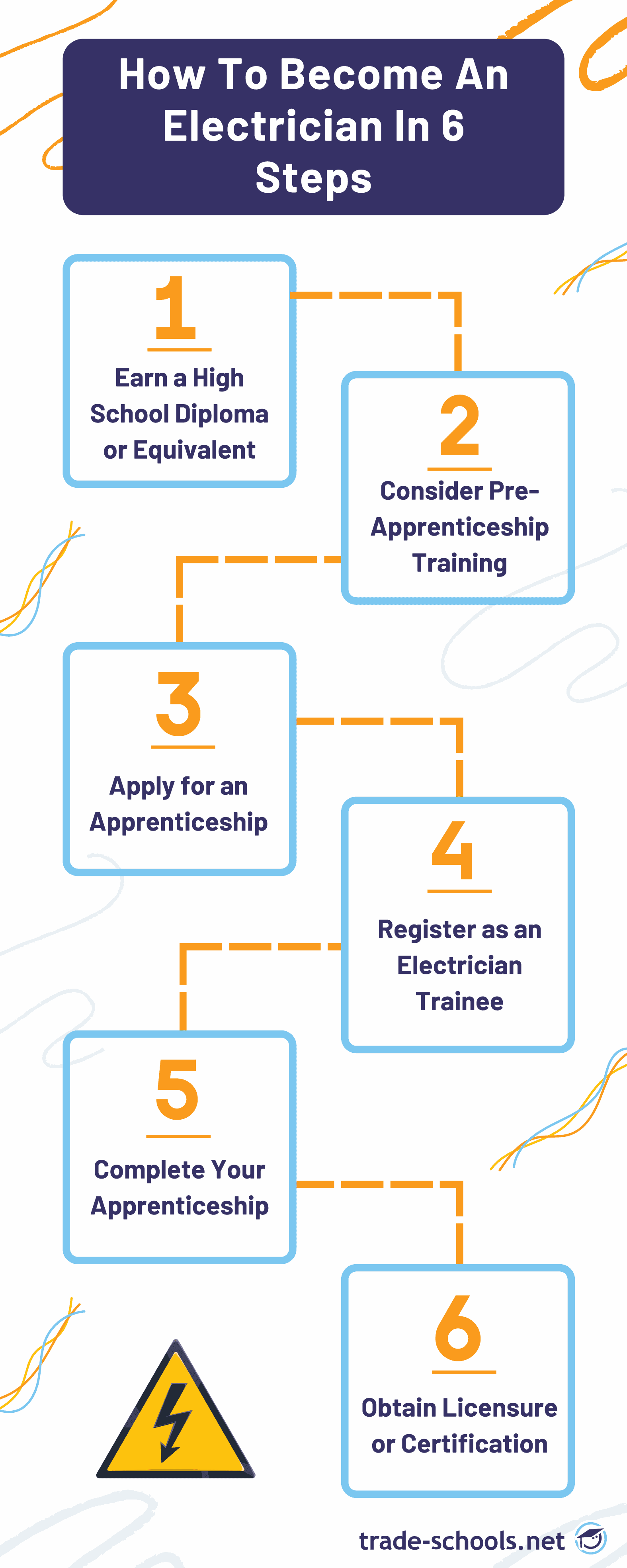
Source : trade-schools.net
For the fastest path, focusing on the journeyman license is usually the smart play. It gets you working and earning good money much sooner than aiming straight for master.
The “Fast Track” – Is It Even Possible?
Deciphering the TDLR Requirements
Texas doesn’t have a magic “fast track” program that skips experience. What it does have are clear requirements. The TDLR is the governing body, and they lay it all out. The core requirement for a journeyman electrician license is 4,000 hours of acceptable electrical experience.
That sounds like a lot. And it is. But if you’re working full-time, 40 hours a week, that’s about 25 weeks – or roughly six months. This is assuming you don’t miss any days! So, the “fastest way” is essentially working diligently and legally from day one.
The Role of Trade School and Education
Can trade school speed things up? Sometimes. Some accredited programs might allow you to count coursework towards your experience hours. The IEC Fort Worth Electrical Training Center, for example, offers programs designed to meet these requirements. But here’s the catch: you still need to clock those hours. Schooling can supplement or provide a structured learning environment, but it doesn’t magically erase the need for practical, on-the-job experience.
Think of it like this: a culinary school graduate still needs to spend time in a real kitchen before they can be a head chef. It’s about building muscle memory and real-world problem-solving skills. School gives you the foundation; the job builds the house.
Apprenticeship Programs: The Structured Route
Formal apprenticeship programs are often the most structured way to get your hours. These programs, sometimes sponsored by unions or trade organizations, provide classroom instruction and on-the-job training. They’re designed to give you Full experience across different types of electrical work.
While effective, these programs can sometimes have waiting lists or specific entry requirements. The key is to find one that moves at a good pace. The faster you complete the program requirements, the faster you can sit for that exam. Check out resources like Contractor Training Center for insights into these pathways.
Handling the Experience Hour Maze
What Counts as “Acceptable” Experience?
This is where people get tripped up. Not just any tinkering counts. The TDLR wants to see you’ve been doing legitimate electrical work. This typically means installing, repairing, or maintaining electrical wiring, equipment, or fixtures.
It has to be under the supervision of a licensed electrician. Working solo on your buddy’s shed doesn’t count. You need documentation. Your supervising electrician needs to verify your hours. Keep Careful records! It’s your responsibility, not theirs.
Getting Your Hours Documented Properly
This can’t be stressed enough: documentation is king. Your supervising electrician must sign off on your work. Many employers use specific forms provided by the TDLR or their own internal systems that Match with TDLR requirements. When in doubt, ask the TDLR directly or consult their official guidelines.
Missing documentation means those hours might not count. And that’s time you can never get back. So, be proactive. Make sure your employer understands the requirements and provides you with the necessary paperwork. This is non-negotiable for your fast electrician training.
Can Military or Related Experience Count?
Sometimes. If your military service involved electrical work that directly aligns with civilian electrical trade practices, it might be considered. You’ll need to provide detailed documentation proving the nature of the work, your responsibilities, and the duration. The TDLR website for journeyman electricians is the definitive source for what they accept. Don’t assume; verify.
The All-Important Exam: Your Gateway to Certification
Understanding the Journeyman Exam Format
The journeyman exam isn’t a multiple-choice quiz you can cram for the night before. It’s a serious test designed to assess your competence. It covers a broad range of topics, heavily based on the National Electrical Code (NEC).
Expect questions on calculations, wiring methods, grounding, safety, and specific Texas electrical laws. You’ll be referencing the code book a lot during the test. Knowing how to find information quickly is almost as important as knowing the answer itself. This is a key part of the process.
Studying Effectively: Beyond Memorization
Cramming won’t cut it. You need to understand the why behind the code. Practice exams are your best friend. Many training providers offer specific exam prep courses. These courses focus on test-taking strategies and highlight the most commonly tested areas.

Source : wikihow.life
Get familiar with the NEC book. Highlight key sections. Make notes. Understand how different parts of the code relate to each other. A solid understanding of the code is the bedrock of passing this exam and being a competent electrician.
The Test Day Logistics
Know where you need to be and when. Arrive early. Bring the required identification. Understand the rules about what you can and cannot bring into the testing center (usually, you can bring an approved copy of the NEC). A calm, prepared mindset is Needed for a successful exam day.
The testing centers are run by third-party providers, usually PSI or Pearson VUE. Make sure you book your exam through the correct channel, as directed by the TDLR. Don’t let administrative hassles derail your progress.
Alternative Paths & Considerations
Electrical Apprentice vs. On-the-Job Training
Formal apprenticeship programs offer structure. But many people become electricians through direct on-the-job training with a licensed contractor. The key difference is the level of formal education you receive alongside the practical experience. Both can lead to licensure, but the structured apprenticeship often provides a broader theoretical understanding.
For speed, direct hire might seem faster initially. You start earning right away. But Make sure the contractor is committed to providing the breadth of experience needed and will properly document your hours for the TDLR. You don’t want to hit 4,000 hours only to find out half of them weren’t properly supervised or documented.
Can You Test Out of Some Requirements? (Spoiler: Mostly No)
Texas is pretty strict. While some states might have provisions for “challenging” the exam based purely on years of experience without formal apprenticeship, Texas generally requires the 4,000 documented hours. There isn’t really a way to skip the experience requirement entirely. It’s a safeguard for public safety.
Think of it as building a strong foundation. You can’t build a skyscraper on sand. The experience ensures you have the practical skills to handle real-world electrical issues safely and effectively. It’s about building a reliable career, not just getting a piece of paper.
The Importance of Continuous Learning
Once you’re licensed, the learning doesn’t stop. The NEC gets updated every three years. Technology changes. New installation methods emerge. To maintain your license, you’ll need continuing education hours.
Staying current isn’t just about keeping your license; it’s about staying relevant and employable. A forward-thinking electrician is always looking to improve their skills. This commitment to learning is what separates good electricians from great electricians.
Making the Fastest Path a Reality: Actionable Steps
Step 1: Get Registered and Find a Sponsor
Don’t wait. As soon as you decide this is the path, get registered as an apprentice. Start networking. Talk to licensed electricians. Let them know you’re eager to learn and work. Your first goal is finding a licensed sponsor.
This might involve hitting up local supply houses, attending industry events (if possible), or even contacting electrical contracting companies directly. Persistence is key here. You need someone willing to take a chance on you.
Step 2: Work Consistently and Diligently
Once you’re in, work your tail off. Show up on time, every day. Be eager to learn new tasks. Ask smart questions. Be safe. The more you learn and the more reliable you are, the more opportunities your sponsor will give you.
This is where you rack up those 4,000 hours. Treat every day as a learning opportunity. Absorb everything. Your goal is to become Key, not just clock-watch. This consistent effort is the engine of your fast track.
Step 3: Supplement with Focused Study
While working, start preparing for the exam. Don’t wait until you’ve logged your last hour. Get yourself a copy of the NEC. Buy practice exam questions. Consider an exam prep course early on. The earlier you start understanding the material, the less stressful it will be later.
Integrating study with work creates a powerful feedback loop. You’ll see concepts in practice that you’re reading about, and vice versa. This reinforces learning and makes the knowledge stick. It’s about building a solid knowledge base.

Source : stateapproved.com
Step 4: Apply and Schedule Your Exam
As you approach your 4,000-hour mark, Make sure all your paperwork is in order. Submit your application to the TDLR. Once approved, schedule your exam promptly. Don’t delay; your knowledge is freshest right after your intensive study period.
This is the final push. You’ve done the work, you’ve studied hard. Now it’s time to prove it. Passing this exam is the culmination of your efforts and the key to becoming a licensed journeyman.
Common Pitfalls to Avoid on Your Journey
Pitfall 1: Poor Hour Documentation
I cannot stress this enough. If your hours aren’t properly documented and signed off by your supervising electrician, they won’t count. This is the single biggest reason people get delayed. Always verify your documentation process with your employer and the TDLR guidelines.
Don’t rely on verbal agreements. Get everything in writing. Keep copies of everything. A Careful approach now saves massive headaches later. This ensures your documented experience is valid.
Pitfall 2: Neglecting the NEC
Some apprentices think they can learn the trade just by watching. But the license exam is heavily code-based. You need to understand the National Electrical Code inside and out. Relying solely on practical experience without studying the code is a recipe for failure on the exam.
The code is the rulebook. It ensures safety and standardization. Mastering it is fundamental to becoming a licensed professional.
Pitfall 3: Unrealistic Expectations
There’s no overnight success here. While you want to be fast, understand that 4,000 hours takes time and dedication. It’s roughly six months of solid, full-time work. Combine that with studying and the exam process, and it’s a significant commitment. Celebrate milestones, but stay focused on the end goal.
The “fastest way” still requires significant effort and time. It’s about efficiency, not magic. Be patient, be persistent, and you’ll get there. Building a successful career takes time.
The Payoff: What a Texas Electrician License Means
Earning Potential and Job Security
Certified electricians in Texas are in demand. The pay reflects the skill and responsibility involved. As a journeyman, you can expect a solid, reliable income. As you gain more experience, opportunities to move into supervisory roles or specialized fields open up, often with higher pay scales.
The construction and maintenance industries are always booming, and electricity is at the heart of it all. This makes being an electrician a career with excellent job security and growth potential.
Opportunities for Specialization
Once you’re a licensed journeyman, you’re not locked into one type of electrical work forever. You can specialize in areas like industrial electrical systems, residential wiring, commercial installations, solar panel installation, or even become a project manager. This variety keeps the work interesting and allows you to tailor your career path.
Specialization often leads to higher earning potential and more specialized, in-demand skills. It’s a way to continuously grow within the trade and adapt to market needs, ensuring your long-term career success.
Entrepreneurship: Owning Your Own Business
For the ambitious, a journeyman license is the first step toward starting your own electrical contracting business. After gaining sufficient experience (often requiring a master’s license depending on the scope), you can become your own boss. This opens the door to unlimited earning potential and the satisfaction of building your own enterprise.
Running your own crew, choosing your own projects, and reaping the rewards of your hard work. It’s a challenging but incredibly rewarding path for those with an entrepreneurial spirit. It requires more than just electrical skill; it demands business acumen, leadership, and a drive to succeed. This is the ultimate freedom for many skilled tradespeople.
Key Takeaways for Speed and Success
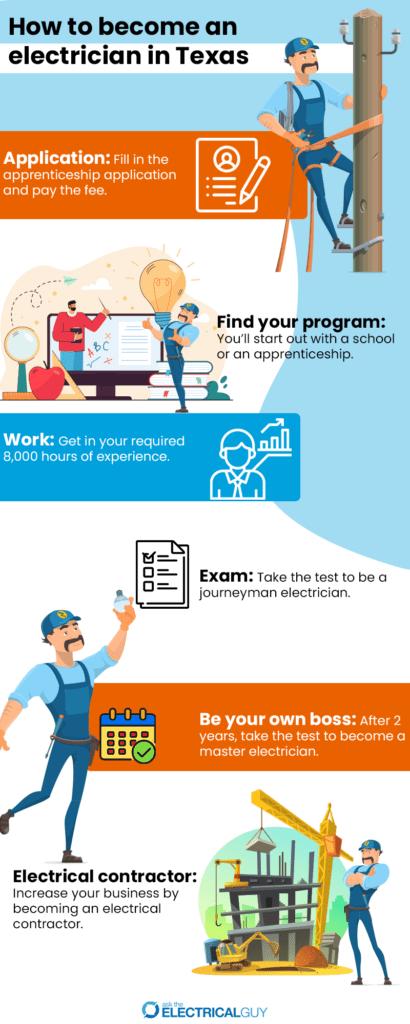
Source : asktheelectricalguy.com
Focus on the Journeyman License First
Trying to jump straight to Master Electrician is a longer road. The journeyman license gets you qualified to work independently and earn a good living much faster. Master electrician status is a great goal, but focus on the most efficient path to becoming a fully licensed and employable electrician first. This is the smartest initial goal.
Prioritize Documented Experience
Every hour counts, but only if it’s documented correctly. Work closely with your supervising electrician to Make sure all your training and experience are meticulously recorded according to TDLR standards. This is non-negotiable for a smooth process.
Treat the NEC Like Your Bible
The exam hinges on your knowledge of the National Electrical Code. Study it diligently, understand its application, and practice referencing it quickly. This isn’t just for the test; it’s Needed for safe and compliant work throughout your career. Your understanding of the code is Top.
Network and Seek Mentorship
Connect with experienced electricians. Learn from their insights. A good mentor can provide Crucial guidance, help you navigate challenges, and potentially open doors to opportunities. Don’t be afraid to ask for advice. Building relationships within the trade is Key for growth.
The trade is built on experience and shared knowledge. A strong network can provide support, job leads, and opportunities for advancement that you might not find otherwise. It’s about building connections for a thriving career.
Final Thoughts: Your Electrical Career Starts Now
Becoming a certified electrician in Texas the fastest way possible isn’t about finding loopholes. It’s about focused effort, smart planning, and relentless execution. Understand the requirements, commit to the work, study diligently, and document everything.
The path is clear. The opportunity is here. Stop waiting and start wiring. Your future as a skilled, in-demand Texas electrician is within reach. Go get it.
Comparison of Texas Electrician Training Pathways
| Pathway | Pros | Cons | Estimated Time to Journeyman Eligibility | Typical Cost |
|---|---|---|---|---|
| Formal Apprenticeship Program (e.g., IEC, NECA-IBEW) | Structured curriculum, broad experience, classroom theory combined with OJT, often leads to higher skill levels. | Can have waiting lists, potentially longer duration due to structured rotations, may have specific entry requirements (e.g., aptitude tests). | 3-5 years (includes required hours) | Varies greatly; some programs are low-cost or tuition-free with paid OJT, others have significant tuition fees. |
| Direct On-the-Job Training (OJT) with Licensed Electrician/Company | Start earning immediately, gain practical experience quickly, potentially faster entry if the sponsor is experienced and organized. | Experience breadth depends heavily on the sponsor, less formal theoretical instruction, requires Careful self-advocacy for hour documentation and diverse training. | ~2-3 years (assuming consistent 40hr/week work & full hour credit) | Minimal to none (you earn wages) |
| Vocational School + OJT (e.g., CTC, Technical Colleges) | Provides foundational knowledge and skills before or during OJT, can sometimes count coursework towards experience hours (verify with TDLR), structured learning environment. | Adds tuition costs, may still require significant OJT hours to meet requirements, success depends on integrating school learning with real-world application. | 2-4 years (depends on program length + OJT) | $5,000 – $20,000+ (for the schooling component) |
Note: Time estimates are approximate and assume continuous, full-time work meeting TDLR requirements. Passing the exam is a separate step after eligibility is met.
Frequently Asked Questions
How much does a 2 year electrician apprentice make in Texas?
Because pay varies a ton depending on the company, location, and your specific skills, but you’re looking at anywhere from $15 to $25 an hour starting out. Some might offer a bit less, some a bit more, but that’s a solid ballpark for your first couple years as an apprentice in Texas.
How quickly can I become a licensed electrician?
But to be honest, the fastest way really involves knocking out that 4-year apprenticeship as efficiently as possible. That means putting in your hours, passing your tests, and proving you know your stuff. It’s a minimum of 8,000 hours on the job, plus a good chunk of classroom time. So, think at least four years, but some folks might take a little longer if they don’t stay with one employer the whole time.
What’s the difference between a residential and a commercial electrician?
Big difference, man. Residential is all about houses and apartments – wiring up outlets, lights, and the standard stuff you see at home. Commercial is way bigger scale, think office buildings, malls, factories. More complex systems, higher voltages, and generally more responsibility. Gotta get experience in both to really round yourself out.
Do I need to pass a licensing exam in Texas?
Absolutely! Once you’ve finished your apprenticeship and got those required hours under your belt, you’ll need to pass the Journeyman Electrician exam. It’s not a walk in the park, so studying up is key to getting that Texas electrician license.
What are the benefits of becoming a certified electrician?
Dude, the benefits are awesome. You get good job security ’cause everyone always needs electricians. Plus, the pay is solid and you can often set your own hours or even start your own business down the line. It’s a real trade where you can build a great career and be proud of the work you do.
0 Response to "Fastest Way To Become A Certified Electrician In Texas"
Post a Comment