How Long Does It Take To Become A Certified Electrician Near Me
So, You Wanna Be An Electrician? Let’s Talk Time.
Forget the fluffy stuff. You’re wondering how long it actually takes to get your electrician certification, right? It’s not some simple answer I can just spit out. It’s a journey, man, with a few different paths and a whole lot of learning involved. Think about it – we’re talking about messing with electricity. You gotta be sure you know your circuits from your… well, your other circuits. Safety first, always.
No one wants a half-baked electrician showing up to their house. So, yeah, there’s a process. And honestly, it’s a solid career choice. Good pay, stable work, and you’re actually doing something tangible. But how long does this “tangible something” take? Let’s break it down, no beating around the bush.
The Grand Scheme: More Than Just Flipping A Switch
Source : trade-schools.net
Becoming a certified electrician isn’t like learning to bake a cake. It’s more like becoming a brain surgeon. Okay, maybe not that extreme, but you get the point. It requires serious dedication, hands-on training, and a deep understanding of safety protocols. Rushing this process is just plain dangerous. We’re talking about powerful forces here, not just a little static shock.
Understanding “Certification” vs. “Licensure”
First off, let’s clear up some jargon. Sometimes people use “certification” and “licensure” interchangeably. They’re not quite the same beast. Certification often comes from completing a training program or passing a specific exam, proving you have a certain skill set. Think of it as a stamp of approval. Licensure, on the other hand, is usually a state-mandated requirement to legally practice your trade. It often involves specific hours of experience and passing a state-administered test. So, while you might get certified, you still need that license to hang your shingle legally.
The Apprenticeship Route: The Old School Way
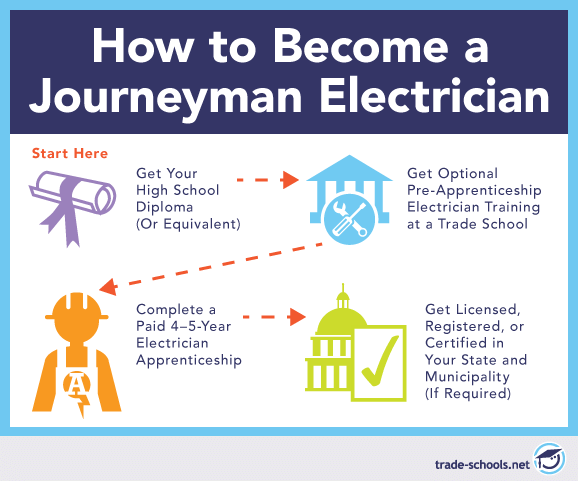
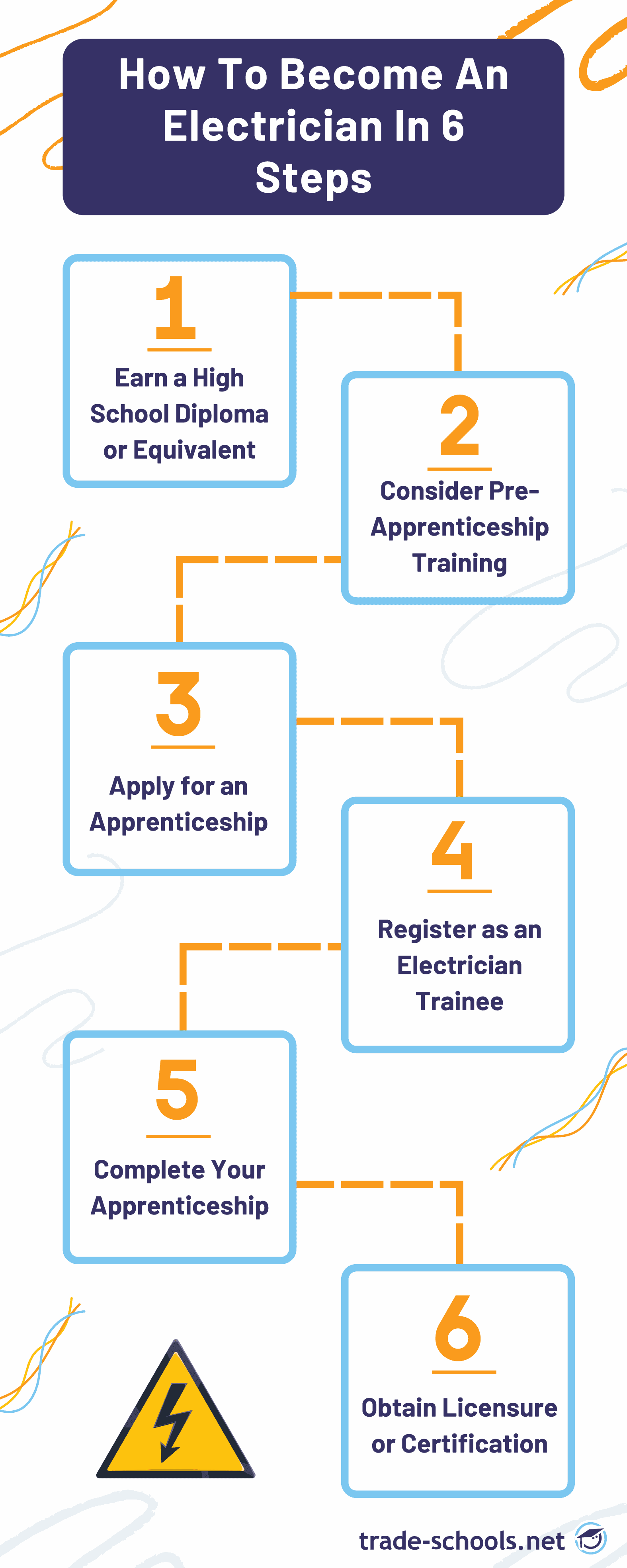
This is probably the most common path people think of. You sign up as an apprentice, usually through a union (like the IBEW) or a non-union contractor. For four to five years, you’re basically getting paid to learn. You’ll spend a good chunk of time in the field, under the watchful eye of a seasoned pro, and then hit the classroom for theoretical knowledge. It’s a grind, but it’s thorough. You’re building real-world skills day in and day out.
Vocational School or Trade School Programs
Then there’s the trade school route. These programs can be shorter, often ranging from six months to two years. You’ll get intensive classroom instruction combined with practical lab work. It’s a more structured, faster pace than a traditional apprenticeship, but you might need to find your own on-the-job experience afterward to meet licensure requirements. Some schools, like Mohave Community College’s Electrical Technology program, offer solid foundations.
Source : trade-schools.net
Direct Entry and On-the-Job Training
Some folks jump straight into a helper role with a company. This is less formal than an apprenticeship. You’re doing basic tasks, learning as you go, and the company might offer some training. This path can be longer and less structured. You’re relying heavily on the employer and your own initiative. It’s definitely a less predictable timeline for becoming fully qualified.
Deciphering the Time Commitment: The Real Numbers
Okay, let’s get to the nitty-gritty. How long are we talking, from beginner to competent, licensed electrician? It’s a range, and it depends heavily on the path you choose and the state you’re in. Nobody wants to be stuck in training forever, but you also don’t want to cut corners when it comes to electrical work.
The Apprenticeship Timeline: A Solid Investment
As I mentioned, the traditional apprenticeship is typically four to five years long. This includes a minimum number of on-the-job training hours (often around 8,000) and a set amount of classroom instruction. It’s a Full program designed to mold you into a fully skilled electrician. Think of it as an extended internship that pays well and leads directly to a career.
Trade School Duration: Accelerated Learning
Trade schools offer a quicker entry point. Many certificate or associate degree programs for electrical technology can be completed in 1 to 2 years. After graduation, you’ll likely still need to gain several thousand hours of practical experience to qualify for your journeyman license. So, while the schooling is faster, the total time to licensure might still add up significantly. This is a popular option for those wanting to get their foot in the door sooner.
Journeyman vs. Master Electrician: Levels to Reach
Becoming a journeyman electrician is the first major milestone. This means you’ve completed your apprenticeship or equivalent training and passed the necessary exams. You can now work unsupervised. But the journey doesn’t stop there! Many electricians aspire to become master electricians. This requires several more years of experience (typically 2-4 years after becoming a journeyman) and passing an even more rigorous exam. So, “becoming an electrician” can mean different things depending on your ultimate career goals.
State-Specific Requirements: A Key Factor
Here’s a biggie: state requirements vary. Some states have stricter rules about training hours, types of experience, and exam difficulty. For instance, Arizona might have different stipulations than California or New York. You absolutely have to check the licensing board in the specific state where you plan to work. Don’t assume anything!
Factors That Can Speed Up (or Slow Down) Your Journey
So, the timeline isn’t set in stone. Lots of things can nudge it one way or the other. It’s not just about clocking hours; it’s about the quality of your experience and your drive.
Your Personal Drive and Aptitude
Are you a natural problem-solver? Do you pick things up quickly? Your innate ability and how much effort you put in make a huge difference. Some apprentices breeze through their training because they’re genuinely passionate and quick learners. Others might struggle and need more time to grasp complex concepts. It’s about dedication, plain and simple. You have to want it.
Source : electricianinformationresource.com
The Quality of Your Training Program
Not all programs are created equal. A top-tier apprenticeship or a well-regarded trade school will provide more Full training, better instructors, and more diverse job site experiences. This can make your learning curve steeper and more efficient. A shoddy program? You’ll likely end up needing more time to unlearn bad habits or fill in knowledge gaps. It’s worth doing your homework on the training provider.
Availability of Work and Mentorship
Sometimes, the pace is dictated by external factors. If work is slow, you might not get the variety of on-the-job experience needed to progress quickly. Likewise, a good mentor can significantly accelerate your learning. Having someone experienced to guide you, answer your questions, and challenge you makes a world of difference. Finding a great mentor is like striking gold.
Continuous Education and Specialization
Once you’re licensed, the learning doesn’t stop. Technology evolves, codes change, and new techniques emerge. To stay relevant and advance your career, you’ll need to pursue continuing education. Want to specialize in something high-demand like solar installation or industrial controls? That takes extra training and time, often leading to higher pay and more interesting projects.
A Sample Timeline: Putting It All Together
Let’s paint a picture. Imagine you’re starting from scratch. What does a realistic path look like? It’s not just about the minimum requirements, but what it takes to be truly proficient.
Scenario 1: The Traditional Apprentice
Year 1-5: Complete your apprenticeship program. This includes roughly 8,000 hours of on-the-job training and 400-1000 hours of classroom instruction. You’re learning the fundamentals, working on residential and commercial projects, and absorbing knowledge like a sponge.
End of Year 5: Pass your journeyman exam. Congratulations, you’re a licensed journeyman electrician!
Year 6-9 (Optional): Gain additional experience and potentially take advanced courses to qualify for and pass your master electrician exam.
Scenario 2: The Trade School Grad
Year 1-2: Complete a vocational/trade school program. You gain foundational knowledge and some hands-on skills. This gets you a certificate or associate degree.
Year 2-5 (or more): Secure employment and accumulate the required on-the-job experience hours mandated by your state. This is where you gain practical skills and learn the ropes on actual job sites. This phase can vary wildly.
End of Year 5 (or later): Pass your journeyman exam. You’ve reached the same milestone as the apprentice, but perhaps with a different learning curve.

Source : research.com
The Importance of Experience Beyond Hours
Look, those 8,000 hours are a minimum. The real learning happens when you’re exposed to different types of work: new construction, old renovations, troubleshooting complex systems, emergency repairs. A varied experience base helps you develop critical thinking and adaptability. It’s not just about putting in the time; it’s about the quality of that time.
Data Deep Dive: Comparing Paths
Let’s visualize the commitment. It’s Key to see the differences laid out clearly. This isn’t just about days or weeks; it’s about years of dedicated effort.
| Path | Estimated Schooling Time | Estimated On-the-Job Training (OJT) | Total Time to Journeyman (Approx.) | Pros | Cons |
|---|---|---|---|---|---|
| Union Apprenticeship | ~4-5 Years (Integrated) | ~8,000 Hours (Integrated) | 4-5 Years | Paid training, structured curriculum, strong union support, potential for higher wages/benefits. | Can be highly competitive to get into, longer initial commitment. |
| Non-Union Apprenticeship | ~4-5 Years (Integrated) | ~8,000 Hours (Integrated) | 4-5 Years | Often easier entry, paid training, practical experience. | Training quality can vary, benefits may be less Full than union. |
| Trade School + OJT | 1-2 Years (Full-time) | ~4,000-8,000 Hours (Post-Grad) | 2-6+ Years | Faster entry into the field, focused technical learning. | Significant upfront cost for schooling, need to find OJT separately, potential knowledge gaps without structured apprenticeship. |
| Helper/On-the-Job Only | Minimal/Informal | Varies Greatly (Potentially 8,000+ Hours) | 5-7+ Years | Learn while earning, potentially low barrier to entry. | Highly unstructured, risk of missing key skills, depends entirely on employer quality, slow progression. |
Making the Choice: Which Path Is Right for You?
So, you’ve seen the options. The “best” path really boils down to your personality, your financial situation, and your long-term goals. There’s no single magic answer that fits everyone. You gotta weigh the pros and cons for your own life.
Apprenticeship: The Gold Standard for Many
If you can get into a good apprenticeship program, especially a union one, it’s often considered the most Full and reliable route. You get paid while you learn, the training is standardized, and there’s a clear progression. It demands commitment, but the payoff is usually worth it. Think about organizations like those mentioned on Indeed – they often highlight the apprenticeship value.
Trade School: A Faster Track with Caveats
Trade school is appealing if you want to get started quicker or if you learn best in a formal academic setting. Just be prepared to hustle to find that Key on-the-job experience afterward. You’ll need to be proactive and Make sure you’re getting the right kind of training to meet licensing requirements. Don’t just get a certificate; make sure it leads to a license.
Your Local Resources Matter
Don’t forget to look at what’s available right in your area. Search for “electrician training programs near me.” Check out community colleges, technical centers, and local union halls. Your proximity to quality training facilities is a huge piece of the puzzle. What works in a big city might not be available in a rural area.
Beyond the License: The Never-Ending Climb
Getting that journeyman license is a massive achievement. Seriously, pat yourself on the back. But for a lot of us, that’s just the starting line. The electrical field is constantly changing, and staying relevant means staying curious.

Source : contractortrainingcenter.com
Master Electrician: The Pinnacle?
Aiming for a master electrician license is a common goal. This usually requires an additional 2-4 years of experience after becoming a journeyman, plus passing another tough exam. Master electricians often have more responsibility, can pull permits, run their own businesses, and command higher salaries. It’s a significant step up.
Specialization Opens Doors
The electrical trade is broad. You could specialize in industrial, commercial, residential, low-voltage systems, fire alarms, renewable energy (solar, wind), or even specialized fields like medical equipment or data centers. Each specialization might require additional certifications or training. Choosing a niche can make you highly valuable and potentially increase your earning potential significantly.
Entrepreneurship: Your Own Boss
Many experienced electricians eventually strike out on their own, starting their own contracting businesses. This requires not just technical skill but also business acumen – managing finances, marketing, hiring staff, and understanding regulations. It’s a whole different ballgame, but the time spent mastering the trade provides the foundation for success.
The Bottom Line: It’s A Marathon, Not A Sprint
So, how long does it take? Anywhere from 2 years (if you hustle through trade school and find OJT quickly) to 5-7 years or more if you’re following a traditional apprenticeship or need extra time to gain experience. And that’s just to get that initial journeyman license. Becoming a master or a specialist takes even longer.
It’s a significant time investment, sure. But the reward? A stable, well-paying career where you’re constantly learning and building something real. It’s honest work, and in today’s world, that’s saying something. So, if you’re ready to put in the time and effort, the path to becoming a certified electrician is definitely within reach.
Frequently Asked Questions
How fast can I become a licensed electrician?
Because it’s a trade, you’re looking at a few years typically. Most folks take around 4 to 5 years from starting an apprenticeship to becoming a fully licensed electrician. It really depends on your state’s requirements and how quickly you complete your hours.
What is the number one killer of electricians?
But sadly, it’s electrocution. Working with live electricity is incredibly dangerous, and even experienced pros can make mistakes. Always following safety protocols is key to avoiding fatal accidents.
What are the 4 types of electricians?
You’ve got your residential guys who wire up houses, then commercial ones for businesses. Industrial electricians deal with big factories and plants. And don’t forget maintenance electricians, who keep everything ruing smoothly. So, residential, commercial, industrial, and maintenance.
What is the fastest you can become an electrician?
While it usually takes years, some accelerated programs might shave off a little time, but honestly, you’re still looking at at least 3 to 4 years. The journey involves a lot of hands-on experience, and you can’t really rush that Key learning phase to become a fully certified electrician.
Is becoming an electrician a good career choice?
Yeah, definitely! It’s a solid trade with good pay, steady work, and you’re always learning something new. Plus, you get to build and fix things, which is pretty satisfying. The demand for skilled electricians isn’t going anywhere.
0 Response to "How Long Does It Take To Become A Certified Electrician Near Me"
Post a Comment